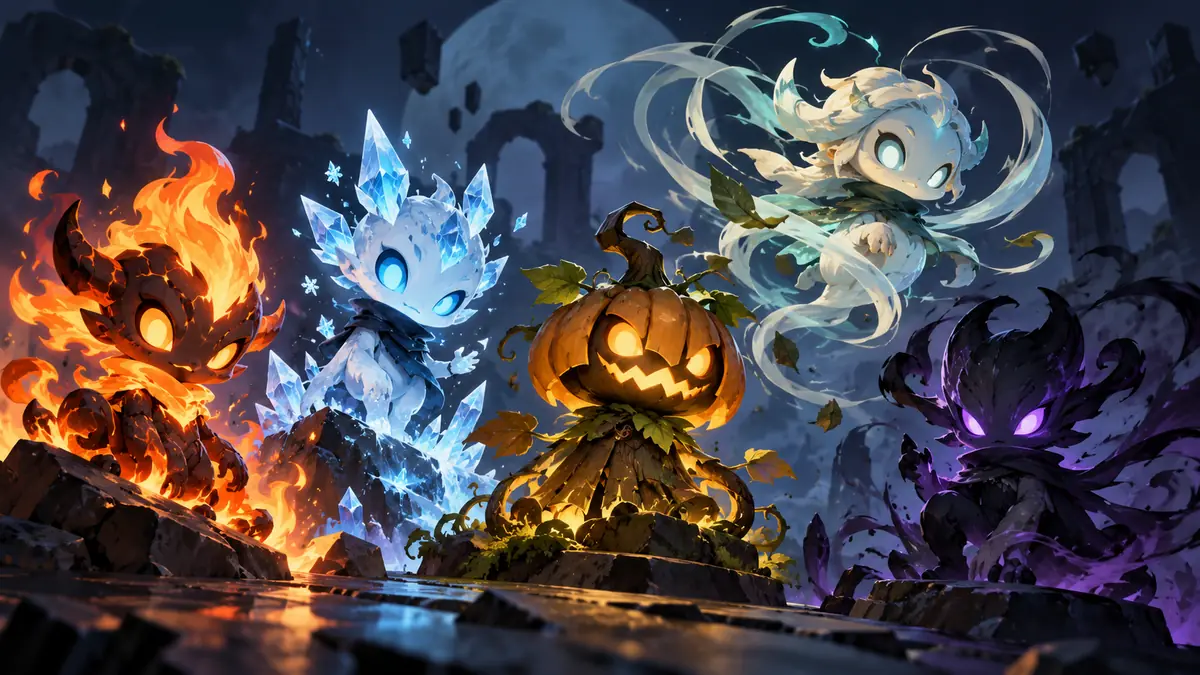
The early visual direction for BoomBo explores cute-creepy elemental characters: pumpkin, fire, ice, wind and shadow. The goal is to make the cast recognizable in a small top-down arena before adding decorative detail. A character that looks attractive on a large concept sheet may disappear when reduced to its gameplay size. Since the project is upcoming, these themes are exploratory and do not establish a final roster, ability set or cosmetic shop.
Current Direction and Design Reasoning
Begin with silhouette and value structure. Fire can use pointed flame contours, ice angular shapes and wind curved motion, but each character also needs a distinct body outline. Color and glow support recognition after the shape works. A shadow character particularly needs separation from the floor: a faint rim or contrasting eyes can help without washing out the intended mood. Excessive glow can merge nearby characters and make the projectile harder to see.
A Reviewable Scenario
Place five concept silhouettes on the same arena background at the proposed gameplay scale. View the image in grayscale, then remove particle effects. Ask a tester to identify each character after a brief glance. If recognition depends on a long trail or a large aura, the underlying design may need work. Then restore the effects one at a time and inspect whether combat information becomes easier or harder to read.
Related Systems to Review Together
Sprite Outlines: Layer Order and Readability
Outlines help a character separate from its background, but overlapping outlined sprites can create confusing seams. Decide whether the outline belongs to each sprite or to the assembled character. Layer sorting must keep weapons and body parts coherent. Inspect busy scenes where several characters touch, not just a single isolated pose.
2D Shadows: Explaining Height without Full 3D
A ground shadow communicates where a floating object belongs. Its position should follow the ground reference while the sprite moves vertically. Size and softness can suggest height, but they should not imply a different collision rule accidentally. Shadows also need a contrast budget so a group of flying enemies does not turn the arena floor into a dark patch.
VFX Screen Coverage: Keeping the Arena Visible
An effect budget should consider how much actionable space is hidden, not only particle count. A few large flashes can cover more than hundreds of tiny sparks. Inspect the worst combined moment and identify which effects carry essential information. Remove or shorten decorative layers before reducing the warnings that tell the player how to survive.
A Practical Checklist
- Compare silhouettes at actual play size.
- keep player and enemy effects visually distinguishable.
- review fire and ice concepts against both bright and dark ground.
Limits and Misinterpretations
Do not present concept characters as released skins; avoid giving every element the same glow radius; avoid relying only on hue to communicate a threat.
Next Step and Review Criteria
A compact art sheet should include the resting pose, moving pose and an action pose with consistent scale. Mark which details survive the camera distance and which belong only in promotional artwork. This makes later animation decisions less arbitrary. The temporary BoomBo cover follows the playful dark direction, but it is concept art and can be replaced when representative in-game captures exist.
Frequently Asked Questions
Are these confirmed playable characters?
No. They are early visual themes under exploration.
Does an element imply a specific ability?
Not automatically; visual identity and combat rules must be defined separately.