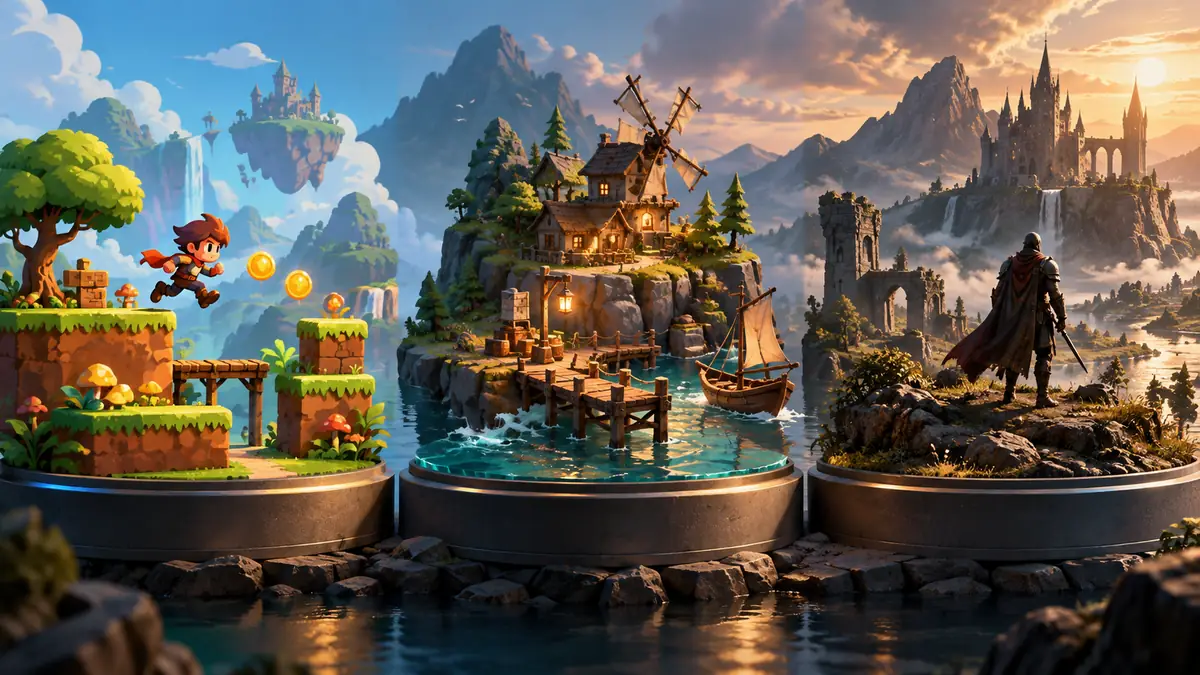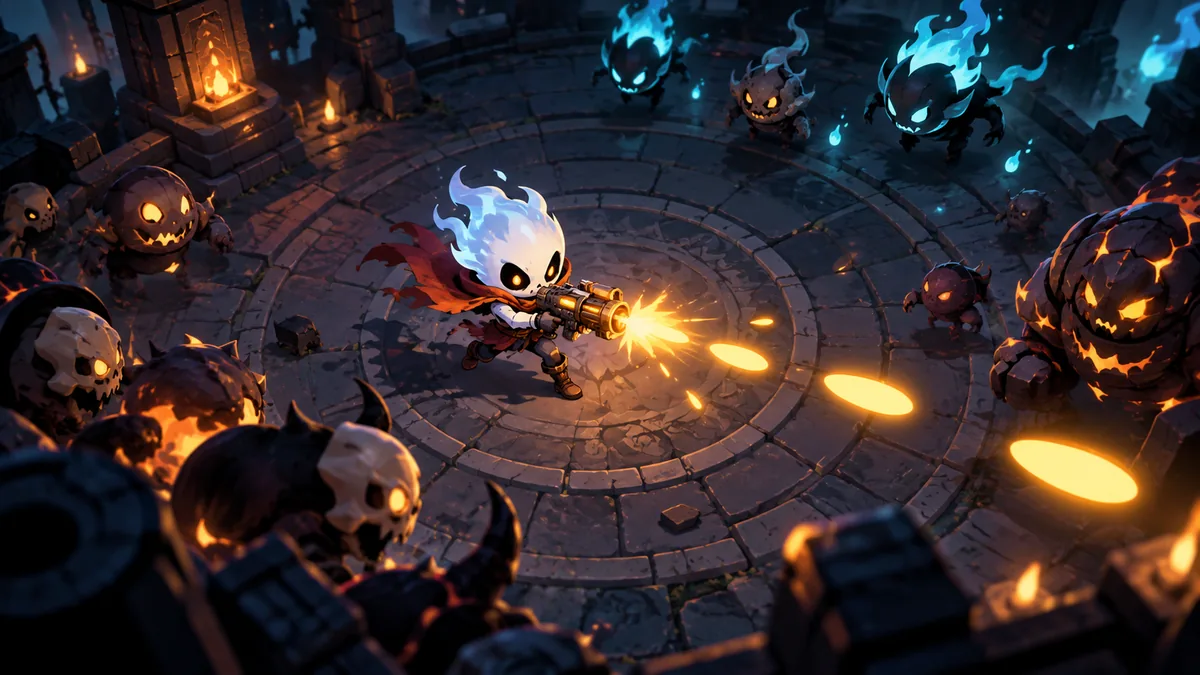
BoomBo is an upcoming 2D top-down shooter being developed in Unity. The current direction starts with a small, readable arena: moving through danger, aiming independently and understanding what each enemy contributes. This page introduces an early concept rather than a finished feature list. There is no announced release date, and the temporary artwork shows an intended mood rather than captured gameplay. The useful question at this stage is whether the basic actions feel clear before more content is added.
Current Direction and Design Reasoning
A top-down camera makes spacing part of the combat language. The player should recognize a projectile, an approaching creature and a possible escape route without stopping to decode the picture. Independent movement and aiming can support that goal, but the interaction must earn its complexity on a touch screen. A control scheme that feels comfortable with a mouse still needs practical tests with two thumbs. Character size, arena contrast and effect intensity should be judged together rather than as separate cosmetic decisions.
A Reviewable Scenario
Imagine a short test room with one chasing opponent and one opponent that attacks from a distance. First play it with movement alone. Then add aiming, followed by a single attack and a simple recovery route. If a player cannot explain why a hit happened, the next useful change may be a clearer warning or less visual overlap. Increasing health or reducing enemy count can hide the issue without explaining it. This scenario is a suggested prototype exercise, not confirmation of the final enemy roster.
Related Systems to Review Together
Enemy Roles: Chasers, Harassers and Space Controllers
Enemy roles make a group more understandable when each asks a different question. A chaser tests movement, a harasser interrupts attention and a controller changes safe space. Distinct art helps, but behavior must carry the role. Combining all three powers in every creature removes the player’s reason to prioritize targets.
Enemy Wave Budgets: Combining Threats Intentionally
A wave budget represents combined pressure rather than enemy count alone. A slow chaser and a ranged controller can cost different amounts because they remove different escape options. Track simultaneous threat, arrival pacing and the available arena space. Spend the budget gradually when a single instant batch would leave no understandable opening.
VFX Screen Coverage: Keeping the Arena Visible
An effect budget should consider how much actionable space is hidden, not only particle count. A few large flashes can cover more than hundreds of tiny sparks. Inspect the worst combined moment and identify which effects carry essential information. Remove or shorten decorative layers before reducing the warnings that tell the player how to survive.
A Practical Checklist
- Build a room that can restart immediately.
- test movement and aiming separately before combining them.
- ask a new tester to describe the threat they noticed first.
Limits and Misinterpretations
Avoid treating concept art as a screenshot; avoid announcing a platform release or date before it is decided; avoid adding waves before the first encounter reads clearly.
Next Step and Review Criteria
The test is ready to expand when the player can identify incoming danger, intentionally choose an escape direction and resume play after a mistake. Record control errors separately from combat failures. An early playable loop provides more useful evidence than a large catalogue of promised enemies. Keep a list of unresolved questions beside the build so the next iteration answers a specific concern.
Frequently Asked Questions
Is BoomBo available now?
No. It is listed as Coming Soon and is still in development.
Is the cover final?
No. It is temporary concept artwork and can change as the game develops.