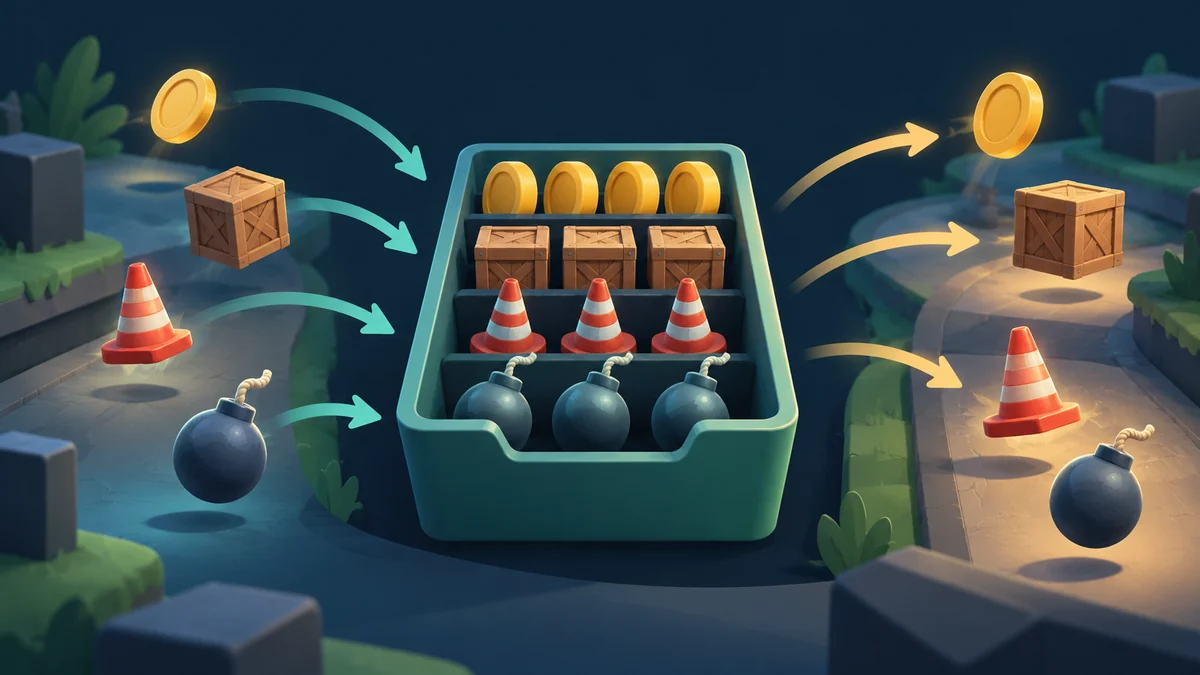
An engine update matters when it solves a problem in your project. List the affected packages, rendering path and build targets before upgrading. Keep a working copy and compare a representative scene after the change. Roadmap announcements and shipped features are different kinds of information; verify the documentation for the exact editor version used.
The Project Question and Its Limits
Keep state ownership explicit. The system that accepts an action should settle its result; animation, sound and interface layers describe that result. Review initialization and cleanup as well as the happy path. A component that works once can still fail after pooling, reloading or returning from a pause.
From an Idea to Reviewable Evidence
Choose a small representative case that answers the question in this article. Write the starting condition and the expected result before running it. Preserve the version and relevant settings so a second observation does not quietly become a different experiment. A demonstration is strongest when its limitations are visible alongside the part that works.
A Practical Experiment and an Observation Sheet
Use a small scene with a known initial state. The purpose is to isolate the rule under discussion; changing several systems at once makes the result harder to interpret. Keep the build, input configuration and display conditions beside the observation so the next attempt is genuinely comparable.
- record the editor version. First write the expected contract and record an ordinary attempt. If the baseline is ambiguous, a later boundary case will be difficult to interpret as well.
- compare a representative scene. Choose a case close to the rule boundary and another outside it. Compare the observed result with the expectation; a small visual difference can expose an incorrect state transition.
- keep a rollback build. Repeat the relevant path after a pause, restart or applicable change. Inspect whether anything survives from the previous attempt and which system is responsible for releasing it.
A Failure Case Worth Reproducing
Acceptance Criteria before Expansion
The team can explain the result, reproduce the relevant case and name the remaining limitation.
| Test | Evidence to retain |
|---|---|
| record the editor version | Keep the build and starting state with the baseline outcome. |
| compare a representative scene | Record the boundary and its accepted or rejected result. |
| keep a rollback build | Compare the repeated attempt with the previous ending state. |
Keep state ownership explicit. The system that accepts an action should settle its result; animation, sound and interface layers describe that result. Review initialization and cleanup as well as the happy path. A component that works once can still fail after pooling, reloading or returning from a pause.
Frequently Asked Questions
When is the prototype ready to expand?
Expand after the stated question has a reproducible answer in the intended configuration. Keep boundary and relevant repetition evidence as well as the successful path.
Does one successful run prove every case?
No. The case “A result from one configuration is applied to a different version or audience without checking compatibility.” deserves its own check. Test it beside the ordinary condition and limit the conclusion to the configurations actually inspected.