Hokm: the core’s first real test
After the shared core was ready, Hokm was the first game I built on it. Dealing cards and advancing turns were no longer enough: four players, two teams, the Hakem, trump selection and trick winners needed meaning too. I wanted these rules to stay in Hokm’s own layer. The table holds the cards that have been played, for example, but Hokm’s rules determine which card wins. This was my first serious chance to see whether the shared foundation could host a complete game without becoming Hokm itself.
Play legally first
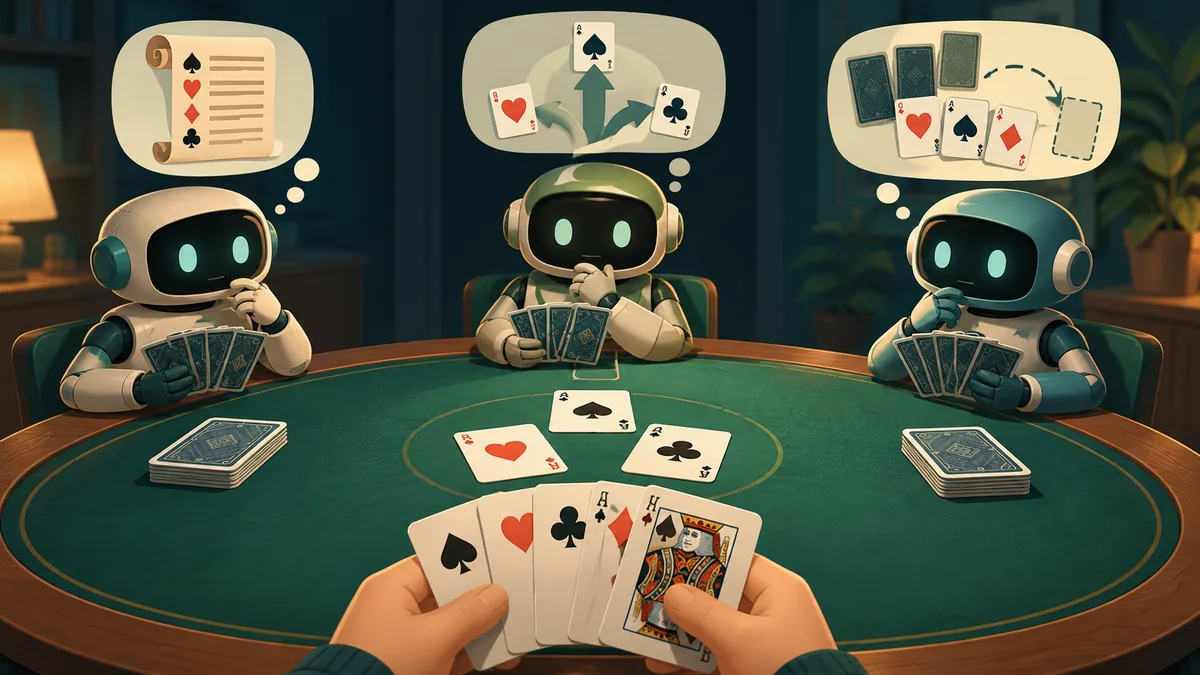
Then came the bots. I built the first version with explicit rules rather than machine learning. My initial aim was simple: one human player and three bots should be able to finish a game. Before a bot decides which card is best, it needs to know which cards it may legally play. If it has the lead suit, it should not bypass that requirement with an illegal choice. That common boundary mattered to me. The human and bots should participate in the same game, governed by the same rules.
From simple rules to card memory
Once the legal choices were clear, I added several simple tactical decisions. If a bot’s teammate was already winning, there was no need to spend a strong card unnecessarily. If the bot could win, it tried to use a weaker card that was still sufficient. If it could not win, a different choice was needed. Later, I added memory of played cards so decisions were not limited to what was immediately on the table. These were concrete steps toward a better opponent. There was still room for more precise decisions, and the first complete games made those weaknesses easier to see.
A better opponent and a clearer table
At the same time, I worked on game feel: card movements, interaction sounds and a clear indication of whose turn it was. A better opponent is not only about card selection; the player needs to follow what has happened on the table. In those development updates, I noted that some player names and interface elements still needed correction. Reaching a complete game and then improving it felt more natural than waiting for a perfect version. Hokm helped me see weaknesses in the core, rules and presentation together. Dalo grew out of those experiences, and its project page continues the story.