The problem I needed to solve
Dimming an illegal card is not enough. If a controller or bot submits a move directly, the rules still need to enforce following suit and return a clear result.
Implementation in this snapshot
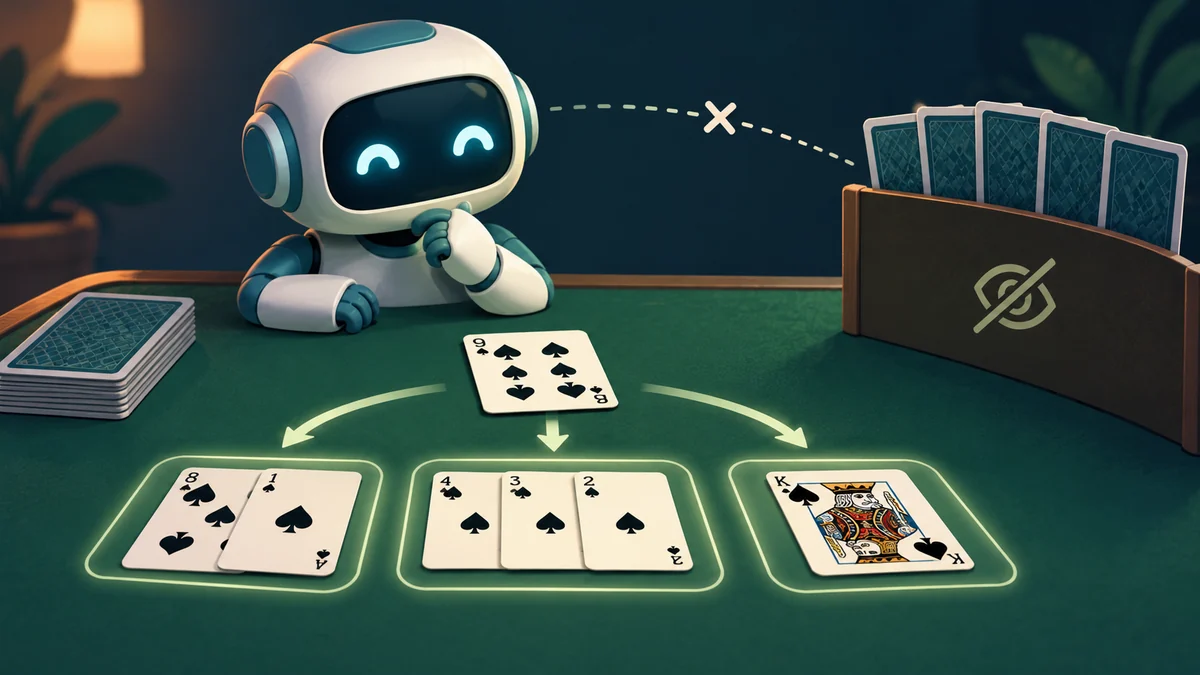
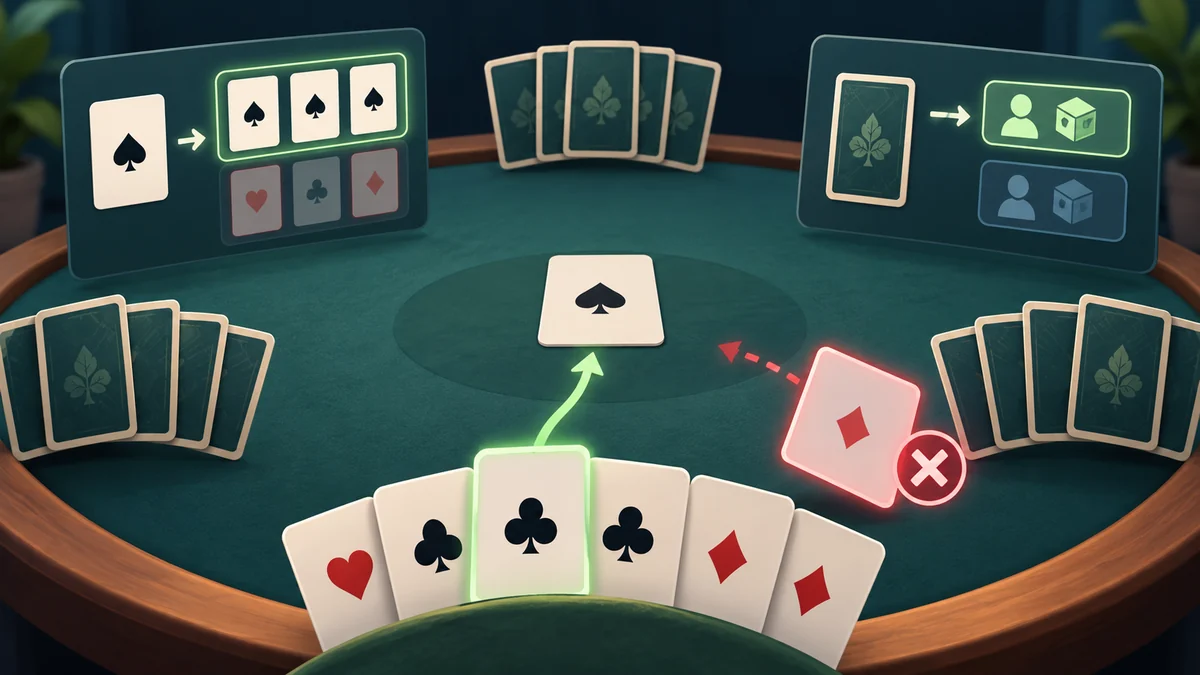
HokmLegalCardValidator.GetLegalCards permits all cards when no lead suit exists, but restricts the hand to that suit when available. ValidateCardPlay also checks ownership, duplicate seat play and trick completion.
The design decision and its cost
The result includes legal cards alongside validation status. That decision can drive both interface highlighting and bot selection, avoiding two independent versions of the rule.
Current boundaries
This validator receives hand and trick state; it is not the turn manager. Turn ownership still needs checking in the play path, and a correct interface does not replace that check.
A legal-card list is not complete execution authority
If Hearts is the lead suit and the player holds Hearts, GetLegalCards returns only those cards. Without Hearts, it returns all non-null hand entries. This supports explaining the follow-suit restriction in the UI. However, the list builder alone does not reject a completed trick or a seat that already played; ValidateCardPlay handles those checks. A highlighting list must not become permanent authority to execute a move without consulting current state again.
Validation checks missing cards, unsuitable attributes, a completed trick, repeated seat play and absence from the hand before acceptance. HandContainsCard matches through ReferenceEquals or InstanceId, rather than equating cards merely by suit and rank. Rejected results can still carry legalCards, giving consumers both the reason and available options. Translating and presenting that reason remains outside this validator.
AddAllCards filters only null, while standard-card validation happens separately in ValidateCardPlay. Corrupt hand data can therefore yield a list whose members do not pass every later check. The validator also does not know which RuntimePlayer currently owns the turn. Dalo needs both boundaries: follow-suit and ownership here, turn authority in the execution path. A highlighted card cannot replace complete logical validation.
What this stage taught me
For me, illegal-card feedback should come from the same truth gameplay uses. Players should not see a card as playable only to have a different rule reject it at execution.