I started with the card itself
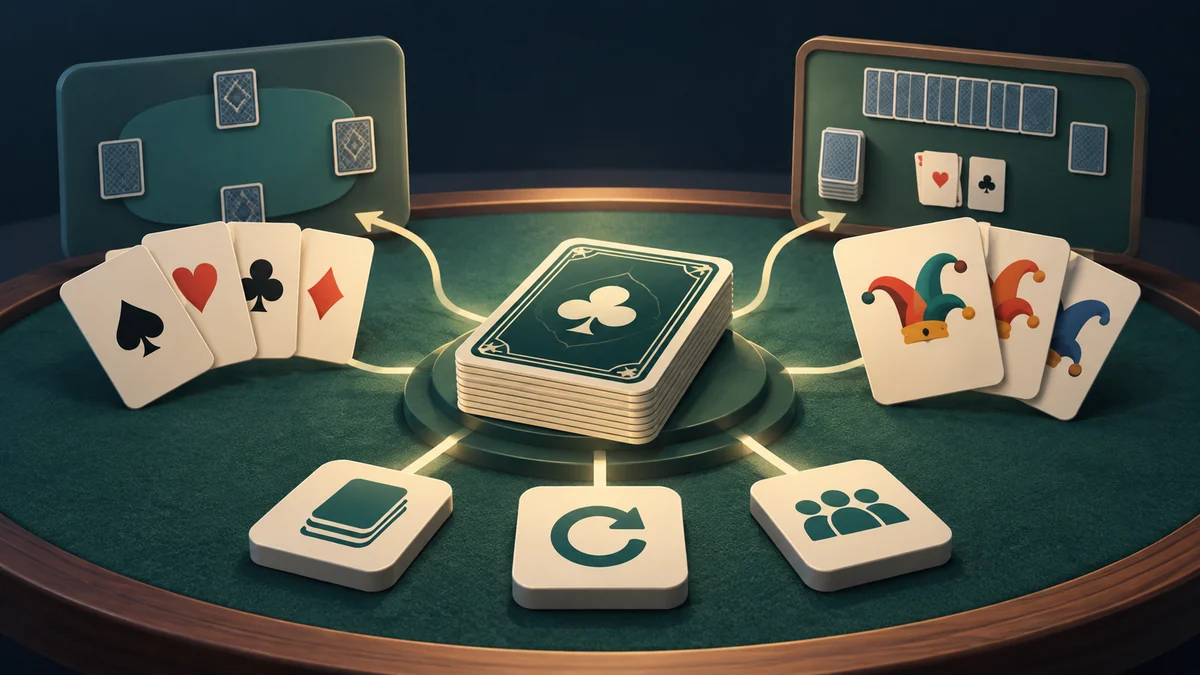
The first thing I built for Dalo was not Hokm or Joker themselves. It was a foundation that could support several card games later. From the beginning, I did not want to rewrite cards, decks, player hands and turns for every game. Those parts resemble one another even when the rules differ considerably. I therefore started with the card itself: each card needs an identity, suit and rank. Its picture is a way of displaying it. With that approach, even a card without finished artwork can participate in the game logic.
Decks and hands without extra rules
After cards, I moved on to decks and dealing. Instead of assuming everywhere that a game must use one fixed deck, I kept the deck definition separate. The system can hold cards, shuffle, draw and reset. A player’s hand is responsible for the cards it contains, rather than all the game’s rules. This separation may not be visible from outside, but it mattered for continuing the project. When a rule changes, I should be able to change that part without rebuilding dealing or the hand’s presentation.
What should the core leave out?
Adding players, turns and the table brought the project to life. I no longer had just a collection of cards: I could deal them, advance turns and track cards on the table. The hardest decision was what to leave out of the core. For example, the core does not need to know who wins a trick in Hokm. Hokm’s own layer should make that decision. Likewise, Joker’s rules should not become like Hokm’s merely because both use the same cards. The shared foundation maintains the flow, while each game defines the meaning of moves and results.
A foundation that had to work in play
I added checks for decks, turns, rounds and full game flow. Then Hokm gave me a chance to see whether this division of responsibilities worked in a real game or simply looked tidy on paper. Joker later used the same foundation, while my teammate wrote Pasur’s implementation. I want those contributions to remain clear in the project’s story, because Dalo brings these pieces of work together. For the player, the result should be a coherent collection. For me, the core became a way to build each new game while focusing on its own rules. Follow the next parts of the story on the Dalo page.